Where to Buy Chemical Industry Carbon Steel Elbows for Import
If you're looking to import chemical industry carbon steel elbows, the best route is to find recognized Chinese suppliers that have a track record of successful exports, a wide variety of products, and established quality control procedures. Suppliers such as Cangzhou Oudi Pipe Manufacture Co., Ltd. (founded in 1998) have been producing seamless and welded carbon steel elbows in standard ANSI, DIN, JIS and BS. They are ISO 9001 certified and possess a special equipment manufacturing license from China. Oudi is precisely the kind of high-volume certified supplier that U.S. importers want, with an annual capacity of 16,000 tons and export activities spanning more than 40 countries.
Understanding Carbon Steel Elbows for Chemical Industry Use
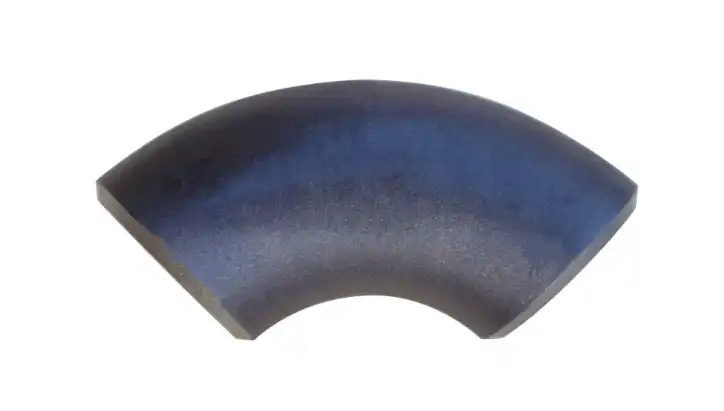
The carbon steel elbow has one basic function to accomplish and that is to change the direction of fluid flow in a pipeline system. From the 90° elbow that diverts process chemicals around a structural obstruction to the 45° elbow that eases flow direction to minimize turbulence, these fittings are part of every chemical plant architecture. Their mechanical robustness, pressure tolerance and weldability make them significantly more reliable in harsh situations than alternatives such as CPVC or ordinary plastic fittings.
Carbon steel elbows are available in two types: seamless and welded. Seamless elbows, made by hot pushing or hot bending, have no weld seam, which makes them more consistent in high-pressure, high-temperature chemical duty. Welded (seam) elbows are suitable for mild pressure applications and are more cost-effective in bigger diameters. Buyers of chemical industry carbon steel elbows should focus on the following main specifications:
Angle types: 45°, 90° and 180°. The 90° short radius elbow is a popular choice for installations in confined spaces such as oil refineries and water treatment facilities, where the elbow’s bend radius is equal to the nominal pipe diameter.
End configurations: Butt weld (BW), socket weld (SW), and threaded ends – butt weld is the most common in heavy chemical duty owing to its leak-resistant connection integrity.
Grades: ASTM A234 WPB is the workhorse grade for broad chemical duty. A420 WPL6 is for low temperature applications.
The two most actionable actions to increase elbow service life in corrosive chemical settings are regular examination for wall weakening at the intrados of the bend and planned coating maintenance.
Criteria for Selecting the Best Carbon Steel Elbow Supplier for Chemical Industry Imports
Certification isn’t a formality when you import pipe fittings for use in chemical plants, it’s a baseline. Any supplier worth their salt should be ISO 9001 quality management system certified, own a special equipment manufacturing license (a requirement of Chinese legislation for pressure bearing fittings), and have the legal capacity to operate its own import/export activities independently. These three credentials together are evidence of a manufacturer's ability to produce to standard and maintain process control, and pass through international commerce without superfluous middlemen.
Oudi has all three. Its quality system is accredited to ISO 9001:2000 and controls all manufacturing stages from the intake inspection of raw material to the complete finished-product inspection and nondestructive fault identification before shipping. It is that end-to-end inspection methodology that differentiates a reliable provider from one that only claims compliance with quality.
Look beyond certification to the manufacturer’s technical depth. Does it use complex manufacturing equipment? Does it accommodate OEM demands, special wall thickness or non-standard specifications. Oudi's plant in Mengcun, Cangzhou, 120 km from Tianjin Port, has a floor area of 66,600 square meters and can produce chemical industry carbon steel elbows to multiple standards in accordance with American, Japanese, German, and British standards.
The reputation of the supplier in export markets is also quite important. Oudi has worked with more than 300 clients in more than 40 countries, including purchasers from Europe, North and South America, Africa, Southeast Asia, Iran, Singapore and Greece. That kind of proven depth of expertise exporting lowers the procurement risk for U.S. importers who demand a partner that understands international shipping documents, customs standards and quality expectations across varying regulatory regimes.
Comparing Carbon Steel Elbows to Alternatives in Chemical Pipeline Procurement
The choice of material directly influences the performance, the maintenance intervals and the total cost of ownership throughout the service life of the pipeline. The table below is a structured comparison to help you make your purchase decisions:
| Criteria | Carbon Steel | Stainless Steel | Alloy Steel |
|---|---|---|---|
| Corrosion Resistance | Moderate (requires coating) | High | High (application-specific) |
| Pressure Rating | High | High | Very High |
| Cost | Low–Medium | Higher | Higher |
| Service Life (standard conditions) | 15–25 years | 25–30+ years | 20–30 years |
| Best Application | General chemical, oil, gas | Aggressive corrosive media | High-temp, high-pressure |
Carbon steel elbows provide the best cost-to-performance ratio for oil, gas and general chemical applications where the process medium is not aggressively corrosive. Stainless steel is more appropriate when chlorides or strong acids are present. Alloy steel grades are used in specialized high temperature or high pressure applications.
From the design point of view, seamless elbows are always better than welded elbows in chemical plant circumstances, since they remove the weak spot of weld zone which might be a place for the commencement of corrosion. The short-radius 90° elbow is suitable for high-pressure oil refining lines. The long-radius version decreases pressure loss in flow-sensitive chemical operations.
Import Process and Procurement Tips for Chemical Industry Carbon Steel Elbows
Getting a competitive quotation is more than sending a list of sizes. Nominal pipe size, schedule or wall thickness, material grade, end type, quantity and relevant standard (ASTM, ANSI, DIN, etc). To be provided to the supplier full specifications. That level of granularity enables manufacturers like Oudi to provide precise prices, not vague line items that balloon later.
Bulk purchases often open the door to cheaper unit pricing, and trusted suppliers with 16,000-ton annual production capability may provide the promise of regular delivery dates – a vital consideration for EPC contractors managing project timeframes. Consider quotations based on the unit pricing, as well as if the supplier provides mill test reports (MTRs), material certificates and third party inspection possibilities.
The U.S. importers are also required to be compliant with the chemical industry carbon steel elbows, which need to fulfill the ASME B16.9 dimensional specifications and have chemical composition and mechanical property test results with each shipment. Customs documents should contain commercial invoices, packing lists, certificates of origin, and any other applicable quality certifications. Oudi conducts its own exporting therefore dealing with a provider like Oudi makes this procedu;re so muc,h easier.
Case Studies: Successful Procurement of Carbon Steel Elbows in Chemical Industry Imports
Real procurement results tell you more than any brochure. Oudi delivered a large order of ASTM A234 WPB 90° long-radius butt-weld elbows to an EPC contractor working on a natural gas processing plant in the Middle East. The requirement includes third party inspection and expediting to reach the project milestone. Oudi’s in-house inspection expertise and closeness to Tianjin Port facilitated shipping within the specified lead time with complete paperwork packages given for customs clearance.
Another instance included a U.S. industrial distributor wanting non-standard wall thicknesses on a high-pressure chemical injection line. Oudi’s manufacturing team constructed the unique specification to the appropriate ASME standard, confirmed with non-destructive defect detection , and dispatched with comprehensive material traceability documentation. The distributor has subsequently ordered often and attributes the long-term relationship to the company’s steady quality and timely technical communication. These results demonstrate the rreal-worldadvantages of selecting a supplier with both manufacturing depth and international logistical knowledge.
Conclusion
Sourcing chemical industry carbon steel elbows for import impacts quality, compliance, cost, and supply continuity simultaneously. The most dependable way of procurement is via manufacturers with confirmed certificates, modern manufacturing facilities ,and real export experience. Oudi spent more than two decades building that foundation, providing a full portfolio of carbon and alloy steel pipe fittings to industrial customers in over 40 countries. Whether your project calls for conventional ASTM grades or unique specs, the appropriate supplier alliance is the difference between a seamless procurement cycle and an expensive delay.
FAQ
How do I identify the right carbon steel grade for my chemical application?
ASTM A234 WPB covers the majority of general chemical and oil/gas service conditions. If your process involves low-temperature service below -20°F, consider A420 WPL6. For high-temperature or elevated-pressure lines, alloy grades like A234 WP11 or WP22 may apply. Always cross-reference your operating pressure, temperature range, and fluid chemistry with the relevant ASME piping code before finalizing the specification.
What is the typical import lead time for carbon steel elbows from China?
Standard stocked sizes from a manufacturer like Oudi typically ship within 15–30 days after order confirmation. Custom sizes or large-volume orders may require 30–45 days of production time. Proximity to Tianjin Port reduces transit variability for sea freight to U.S. ports.
Are custom elbows significantly more expensive than standard ones?
Custom elbows — non-standard wall thicknesses, special coatings, or unique dimensions — carry a modest premium, typically 10–25% above standard pricing depending on complexity and quantity. For high-volume custom orders, the per-unit cost difference often narrows considerably.
Connect With Oudi for Your Next Carbon Steel Elbow Import Order
Oudi has supplied verified-quality chemical industry carbon steel elbows to buyers across 40+ countries since 1998. As a trusted carbon steel elbow manufacturer with ISO 9001 certification, 16,000-ton annual capacity, and full export authority, Oudi is equipped to handle your standard or custom requirements at competitive pricing. Reach out today at oudi-04@oudiguandao.com to request a tailored quote and start building a supply chain you can count on.
References
1. ASME B16.9 — Factory-Made Wrought Buttwelding Fittings, American Society of Mechanical Engineers, 2018.
2. ASTM A234/A234M — Standard Specification for Piping Fittings of Wrought Carbon Steel and Alloy Steel for Moderate and High Temperature Service, ASTM International, 2021.
3. Pipe Fittings and Flanges: Global Market Outlook, MarketsandMarkets Research, 2022.
4. Industrial Piping Materials Selection Guide, Chemical Engineering Magazine, 2020.
5. ISO 9001:2015 — Quality Management Systems — Requirements, International Organization for Standardization, 2015.
6. Corrosion Control in Petroleum and Chemical Plant Piping Systems, NACE International (now AMPP), 2019.
Need help finding the right solution with our experts. Please contact us.

SINCE 1998 Your Reliable Pipeline Manufacturer



