Where to Buy High Temperature Pipe Tees for Import Projects
If you are looking for a high temperature pipe tee for an industrial import project, the short answer is: buy direct from a certified Chinese manufacturer like Cangzhou Oudi Pipe Manufacture Co., Ltd., which holds ISO 9001 certification, a special equipment manufacturing license, and has documented export experience across several continents. These fittings are suitable for temperature conditions from 400°C to 1100°C, and the supplier you choose must be able to demonstrate material traceability, NDT compliance, and dimensional correctness to ASME B16.9. Getting the sourcing selection right safeguards the project timetable and the long-term safety of your pipe system.
Understanding High Temperature Pipe Tees for Import Projects
What Makes These Fittings Different
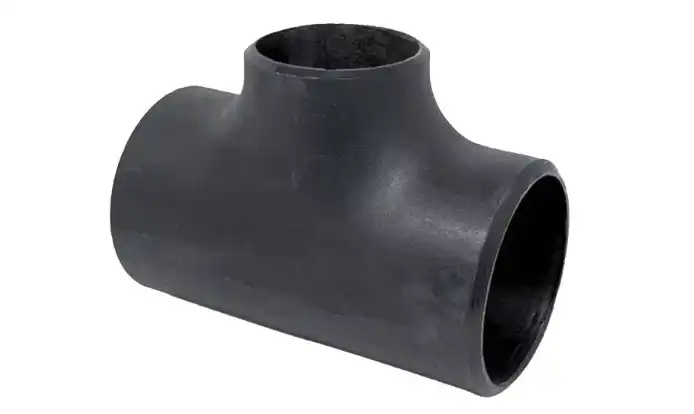
A high-temperature pipe tee is a kind of T-shaped fitting intended for piping systems that operate under high heat. These fittings, unlike typical carbon steel tees, are resistant to creep, the gradual permanent distortion that may occur under continuous temperature stress. They also resist cyclic thermal fatigue due to repeated expansion and contraction without breaking or loss of seal integrity.
Materials and Temperature Ranges
Typical alloys include Chrome-Molybdenum grades (ASTM A234 WP91, WP22), high-alloy stainless steels (310S, 347H), and nickel-based alloys (Inconel 625). For example, WP91 is rated for continuous service up to 600°C (1112°F). Even at the raised thresholds, the Inconel versions are structurally sound up to over 1100degC.
Applicable Standards and Pressure Ratings
These fittings should conform to ASME B16.9 dimensional tolerances and be consistent with pressure-class ratings under ASME B31.3 or B31.1 for power pipes. For international procurement initiatives, DIN and BS standards are also referenced based on end-user needs. If you can know the standard your project requires before ordering, you can save yourself the expense of rework.
Criteria for Selecting High Temperature Pipe Tees for Global Import Projects
Material Selection Based on Application
The stainless steel grades are corrosion-resistant and appropriate for chemical processing settings. Economical carbon steel grades like WP11 and WP22 are used for ordinary use at elevated temperatures. For such extreme settings as ethylene cracking furnaces at 850°C, nickel-based alloys or 347H stabilized stainless steels are the right technological solution.
Seamless vs. Welded Construction
The high temperature pipe tees are free of a weld seam that might be a possible failure site at higher pressure. They are the normal option for high-pressure headers in power generation. Radiographic testing (RT) of welded tees, when correctly performed, is frequently adequate for moderate-stress applications and may provide quicker lead times to satisfy project requirements.
Forged vs. Cast Fabrication
Forging gives a finer grain structure with increased tensile strength and hence is the recommended manufacturing process for pressure-sensitive branch connections. Casting supports complicated shapes, but needs more thorough NDT examination. Both must be per ASME B16.9. Forged construction is the industry standard for supercritical power plants and hydrocracking units.
Where to Buy High Temperature Pipe Tees: Trusted Global Suppliers and Manufacturers
Why Oudi Is a Leading Choice for Import Projects
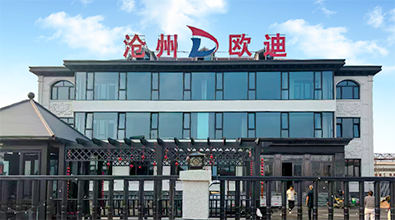
Cangzhou Oudi Pipe Manufacture Co., Ltd. was founded in 1998 and manufactures 16,000 tons of pipe fittings each year. The firm is ISO 9001:2000 certified and has China’s special equipment manufacturing license. Oudi sells to more than 40 countries, including customers in Europe, North and South America, Southeast Asia and the Middle East. That geographical track record counts for a lot – it means Oudi knows customs paperwork, export packaging regulations and international shipping operations from real-world experience, not theory.
Oudi provides tees in carbon steel, stainless steel and alloy steel to American ANSI, Japanese JIS, German DIN and British BS standards. This breadth allows procurement teams to bundle many requirements into one supplier relationship, cutting down on administrative burden and shipping costs for major import projects.
Evaluating Any Supplier's Credibility
Before committing to any pipe tee manufacturer, verify these points:
- ISO 9001 certification and special equipment manufacturing license — these are non-negotiable for safety-critical applications.
- PMI (Positive Material Identification) reports using XRF or OES analysis to confirm alloy chemistry matches the purchase order.
- NDT records — specifically Ultrasonic Testing (UT) or Radiographic Testing (RT) for the crotch area of each tee.
- Hardness test certificates — essential for P91/P92 grades to confirm correct martensitic structure after heat treatment.
- Export history and client references from projects in your region.
These verification steps remove guesswork from the sourcing process and protect your project from substandard material entering the supply chain.
Customization and Bulk Order Options
Oudi produces fittings across a wide specification range and accommodates project-specific requirements including custom wall thickness, non-standard OD dimensions, and special heat treatment protocols such as PWHT (Post-Weld Heat Treatment). PWHT is mandatory for Chrome-Moly grades to relieve residual stress and prevent stress corrosion cracking — and Oudi performs this in-house. Bulk orders benefit from price adjustments, and Oudi's 66,600 square meter production facility supports consistent output without compromising inspection standards.
Procurement Process and Logistics for Importing High Temperature Pipe Tees
Pricing and Lead Times
Alloy steel tees command a price premium over high temperature pipe tees, driven by raw material costs for chromium, molybdenum, and nickel. Current market pricing varies by grade and order volume, so requesting an itemized quotation with material test reports (MTRs) included is standard practice. Lead times from Chinese manufacturers typically range from 20 to 45 days for standard sizes, with express options available for urgent project requirements.
The Ordering Process Step by Step
The process from inquiry to delivery generally follows this path: submit technical specifications and required standards → receive quotation with MTR confirmation → approve samples or inspection reports → place purchase order → production and in-process inspection → pre-shipment inspection → export documentation and shipping. Oudi supports self-managed import and export authority, which means documentation moves without third-party delays.
After-Sales Support and Negotiation Tips
Request that PWHT certificates, dimensional inspection reports, and hydrostatic test records ship with each order. When negotiating bulk terms, ask for locked pricing across a defined shipment schedule rather than spot pricing on each order — this protects your project budget against raw material fluctuations.
Installation, Maintenance, and Best Practices After Purchase
Correct Installation Protocols
Align the tee axis properly before welding to avoid angular misalignment that focuses stress at the branch junction. Preheat to a minimum of 200°C before welding for WP91 tees and post-weld heat treatment (PWHT) to 760°C ± 15°C as per ASME Code standards. Hydrogen cracking is a frequent and avoidable field failure that may occur when preheat is skipped.
Maintenance Schedules That Prevent Failure
In high-cycle thermal situations, inspect high-alloy tees every 12 to 18 months. Check wall thickness in the crotch region where the erosion and corrosion concentrate using UT or phased array UT. The conservative safety limit for replacement of fittings with wall thinning more than 20% of the nominal thickness.
Troubleshooting Common Issues
Thermal fatigue cracking is usually initiated at the branch-to-run weld toe. Stress corrosion cracking (SCC) of stainless steel tees is indicative of chloride contamination of the process fluid or moisture penetration from insulation. Routine NDT can identify both problems in their early stages; thus, inspection scheduling is not an option in petrochemical or power-generating service.
Conclusion
When you're importing, choosing the proper high temperature pipe tee isn't only about pricing; it's also about material grades, fabrication processes, certifications, and the supplier's export expertise. Oudi is an ISO 9001-certified supplier, with a special equipment manufacturing license and approximately 30 years of export experience, which makes it a reliable partner for procurement teams. Oudi is a realistic, proven solution for industrial import projects that can’t afford supply chain surprises. The product range covers carbon steel, stainless steel, and alloy steel, all to all major international standards.
FAQ
1. What alloy is best for service above 600°C?
For continuous service beyond 600°C, stainless steel grade 310S or 347H is appropriate. WP91 Chrome-Moly performs well up to 600°C; above that threshold, higher-alloy grades or nickel-based materials are required to prevent creep failure.
2. Does Oudi provide material test reports with orders?
Yes. Oudi's quality management system, certified under ISO 9001, requires full material traceability from raw material intake through finished goods. MTRs, PMI reports, and NDT certificates are supplied with each shipment.
3. What standards does Oudi produce to?
Oudi manufactures to American (ANSI/ASME), Japanese (JIS), German (DIN), and British (BS) standards, covering a broad range of international project specifications.
4. What are realistic lead times for alloy steel tees?
Standard alloy steel tees typically ship within 25 to 45 days. Complex specifications requiring special PWHT or non-standard dimensions may extend lead time to 60 days. Confirm lead time at the inquiry stage.
5. Can I order small quantities for pilot projects?
Oudi accepts orders across a range of volumes. Contact the sales team at oudi-04@oudiguandao.com to discuss minimum order quantities for your specific grade and size requirements.
Request a Quote from Oudi — Your Trusted High Temperature Pipe Tee Supplier
Oudi has supplied certified pipe fittings to over 300 clients across 40+ countries since 1998. Whether you need alloy high temperature pipe tees for a petrochemical plant or stainless steel fittings for a power project, Oudi's 16,000-ton annual capacity and rigorous full-inspection system back every order. Reach out today for a detailed quote tailored to your project specifications. Contact us at oudi-04@oudiguandao.com and let our technical team support your next import project from inquiry to delivery.
References
1. ASME International. ASME B16.9: Factory-Made Wrought Buttwelding Fittings. 2018.
2. ASME International. ASME B31.3: Process Piping Code. 2022.
3. American Society for Testing and Materials. ASTM A234/A234M: Standard Specification for Piping Fittings of Wrought Carbon Steel and Alloy Steel for Moderate and High Temperature Service. 2022.
4. TWI Global. Welding Technology Institute of Australia — Guidelines on Post-Weld Heat Treatment for Chromium-Molybdenum Steels. 2019.
5. European Industrial Insulation Foundation. Piping System Design for High Temperature Industrial Applications. 2020.
6. International Organization for Standardization. ISO 9001:2015: Quality Management Systems — Requirements. 2015.

Need help finding the right solution with our experts. Please contact us.
SINCE 1998 Your Reliable Pipeline Manufacturer