Where to Buy Socket Weld Pipe Tee for Industrial Projects
Finding the right source to purchase Socket Weld Pipe Tees for industrial applications requires careful evaluation of supplier capabilities, product quality, and compliance standards. We recommend partnering with certified manufacturers that maintain ISO 9001 quality systems and special equipment manufacturing licenses while offering comprehensive material options across carbon steel, stainless steel, and alloy steel grades. Direct manufacturer relationships typically provide better traceability, competitive pricing structures, and customization flexibility compared to multi-tier distribution channels, especially for projects demanding ASME B16.11 compliance and pressure ratings from Class 3000 to Class 9000.
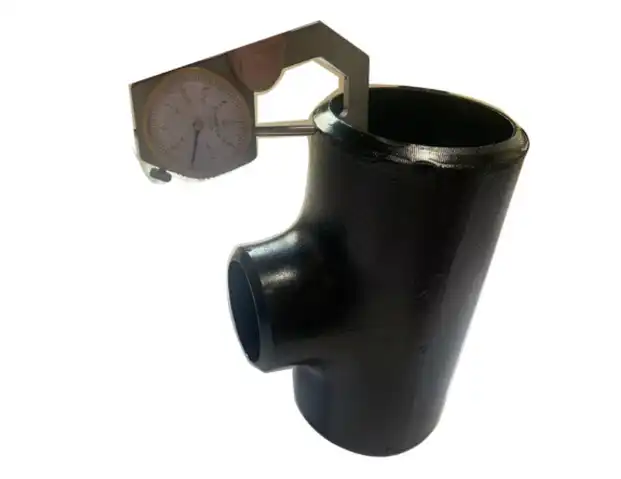
Understanding Socket Weld Pipe Tee – Key Knowledge for Buyers
In order to make branch connections in small-bore pipe systems working under high pressure, Socket Weld Pipe Tees are a specialized class of forged Socket Weld Pipe Tees. Each hole has socket slots machined into it, which let the pipe ends fit all the way in before fillet welds seal the joint. This design gets rid of the alignment problems that come with butt weld joints and makes the assembly stronger than a threaded assembly.
Structural Advantages in High-Pressure Applications
The forging process makes a continuous grain flow that follows the shape of the Socket Weld Pipe Tee. This gives the metal great resistance to pressure and fatigue. This metal's edge is very important in situations where the pressure changes, the material expands and contracts, and it is exposed to vibrations. On offshore platforms that use chemical injection skids, Socket Weld Pipe Tees made of Duplex stainless steel are often used to distribute corrosion inhibitors at pressures higher than 5,000 PSI. The smooth internal geometry stops the erosion-corrosion washout that damages threaded connections.
Power plants use these Socket Weld Pipe Tees for instrument root valve installations and high-temperature steam distribution networks that work above 500°C. The Socket Weld Pipe Tee design works as a self-aligning fixture during installation, so there's no need for tack welding in tight areas where tools can't be easily reached. This useful benefit cuts down on installation time while making sure that the quality of the welds is the same across large construction projects.
Material Specifications and Standards Compliance
The standards set by ASME B16.11 for socket-weld pipe tees include limits for socket depth, bore width, wall thickness, and center-to-bottom measures. ASTM standards are used to choose materials. For general-purpose uses, A105 carbon steel is good, and A182 stainless steel types (F304/304L, F316/316L) are good for corrosive conditions. Different types of alloy steel (F11 and F22), when used in boiler feedwater systems and thermal oil circuits, can handle high temperatures.
There is a direct link between pressure class names and pipe schedule compatibility. Class 3000 Socket Weld Pipe Tees go with Schedule 80 or XS pipe, Class 6000 Socket Weld Pipe Tees go with Schedule 160 pipe, and Class 9000 Socket Weld Pipe Tees fit XXS extra-heavy wall pipe. Knowing these connections helps make sure that the specifications are aligned correctly during procurement, which stops problems during installation in the field caused by parts that don't fit. According to EN 10204 3.1, material test certificates show the chemical make-up and mechanical properties of an item, which is what quality assurance teams need to prove compliance and trackability.
How to Choose the Right Socket Weld Pipe Tee Supplier
The choice of supplier has a big effect on the success of a project because it affects the quality of the product, the dependability of delivery, and the long-term performance of the system. When people only compare prices when buying something, they don't look at important factors that affect whether the Socket Weld Pipe Tees will work reliably for the whole time they're supposed to or break down early in use.
Defining Project Requirements Before Supplier Evaluation
Setting clear technical requirements is the first step in making meaningful comparisons between suppliers. Based on the process conditions and fluid qualities, engineers must write down the necessary pressure ratings, temperature ranges, material grades, and properties that prevent corrosion. For projects that deal with hydrogen sulfide, materials must be NACE MR0175-compliant for sour service applications. For cryogenic systems, materials must be impact-tested and certified for low-temperature operation.
Whether local wholesalers, regional fabricators, or direct manufacturer ties are the best choice depends on the amount of work that needs to be done and when it needs to be done. Large infrastructure projects benefit from manufacturers keeping a large inventory and being able to change their production schedules as needed. On the other hand, maintenance operations may prefer distributors who have common sizes in stock right away. When buying, teams understand these trade-offs, they can use the right weighting of evaluation factors.
Assessing Supplier Credentials and Quality Systems
ISO 9001 certification shows that suppliers have documented quality management systems that cover getting raw materials, controlling the production process, and inspecting the finished product. But just checking the certificate isn't enough to give buyers peace of mind. They should also look at audit reports, look into nonconformance handling protocols, and look into traceability systems that connect finished products to certifications for raw materials.
The ability to make things deserves a close look. The use of advanced forging tools, CNC machining centers, and automated inspection systems shows a high level of technical sophistication that supports accurate measurements every time. Non-destructive testing, such as ultrasonic examination, magnetic particle inspection, and positive material identification, shows if suppliers have the analytical tools to find flaws, surface cracks, and changes in material composition before the products get to customers.
At Oudi, we keep strict quality control that includes checking the raw materials and inspecting the finished products. Our building has high-tech NDT equipment that can find flaws in the forging and on the surface that could affect the integrity of the Socket Weld Pipe Tee. For each Socket Weld Pipe Tee, the dimensions are checked against ASME B16.11 standards, and the material's chemistry is checked using PMI spectrography to make sure they match the certification paperwork. This strict approach gets rid of the quality uncertainty that comes with buying from sources that haven't been checked out.
Comparing Manufacturer Direct Versus Distribution Channels
Direct relationships with manufacturers offer a number of strategic benefits. Engineering teams can talk about specific needs without having to worry about misunderstandings between interpreters. Custom changes can be made for specific uses, and price models get rid of distribution markups. Manufacturers that offer design support help choose the best Socket Weld Pipe Tees based on how they will be used, not on general catalog specs. In exchange, lead times are longer and minimum order quantities may be higher than with distributor stock programs.
Industrial wholesalers are important parts of the buying ecosystem because they keep standard setups in stock, combine orders from different makers, and offer expert support in the local area. This model works well for maintenance tasks that need to replace broken parts quickly, as well as for smaller projects that can't afford to buy the minimum quantities required by the manufacturer. But buyers give up direct access to production experts and agree to fewer customization choices in exchange for speed and ease of use.
Where to Buy Socket Weld Pipe Tee – Reliable Sources and Platforms
Socket Weld Pipe Tees can be bought through a number of different outlets. Each has its own pros and cons that sourcing professionals must weigh against the needs of the project.
Direct Manufacturer Purchasing
When you work directly with manufacturers, you have the most control over product specifications, certifications for materials, and quality documentation. This method works especially well for big projects that need custom pressure ratings, materials that aren't standard, or specific heat treatment protocols. Talking to production engineers directly makes sure that specific application needs are accurately turned into manufacturing instructions, instead of going through salespeople who might not know much about the subject.
Oudi makes Socket Weld Pipe Tees that meet American, Japanese, German, and British standards for pressure classes ranging from 3000 to 9000. Our yearly production capacity of 16,000 tons serves both long-term supply deals for repair work and big project commitments. We are in the industrial zone of Cangzhou, which gives us easy access to major transportation networks. Our logistics links to Tianjin Port are also very good, which makes it easy to ship goods to North American and European markets. When you combine special equipment manufacturing licenses with ISO 9001 certification, you get the legal compliance that EPC companies need to qualify for a project.
We can help engineering teams choose the best Socket Weld Pipe Tees for different service conditions thanks to the technical knowledge we've gained over the past 25 years. Our metallurgical knowledge helps us choose the right material grades and pressure ratings for projects that need to work in high-temperature steam environments, corrosive chemical environments, or cryogenic natural gas handling. This is done by balancing performance needs with budget limitations.
Industrial Distributors and Stockists
Well-known distributors all over North America keep stock of common Socket Weld Pipe Tee sizes in both carbon steel and stainless steel grades. This model lets common configurations be filled quickly, which helps repair operations that can't wait for manufacturing lead times. Distributors are also useful because they can combine invoices when projects need a lot of different types of products from different manufacturers.
The limitation includes fewer ways to customize and less technical help than when you work directly with the maker. Unit costs go up because of distribution markups, but this extra cost may be worth it if immediate availability stops costly downtime or project delays. To keep materials from breaking down from being on shelves for too long, procurement teams should make sure that distributors keep storage conditions in good shape and use first-in, first-out inventory movement.
Online B2B Marketplaces
As an alternative way to source goods, digital platforms have sprung up that let you compare vendors and hold open bids. Smaller makers and local fabricators that standard buying networks might miss can be found in these markets. The openness of pricing information and customer reviews gives you more information to use when judging a supplier.
Online shopping, on the other hand, comes with a higher risk if the right checks aren't done. Because internet activities are anonymous, people are less responsible than when they do business with a company they know. Before accepting shipments, buyers must be extra careful and ask for detailed material test certificates, third-party inspection reports, and dimensional verification paperwork. The savings in cost may not last long if the products don't meet quality or specification standards.
Ensuring Quality: Inspection, Standards, and Installation Tips
Quality assurance methods determine whether Socket Weld Pipe Tees work reliably for the full length of their intended use or break down early, leading to costly fixes, accidents, and safety risks.
Critical Standards Verification
ASME B16.11 sets the size standards that make sure Socket Weld Pipe Tees and matched pipe plans fit together correctly. Specifications for socket depth make the space needed for a full weld to go through, and tolerances for bore diameter keep things from getting in the way when the pipe is being inserted. To be able to handle the highest working pressure without deforming or breaking, wall thickness measurements must match pressure class ratings.
Material certifications that meet ASTM standards check the chemical makeup and mechanical properties of the material. To meet A105 standards, carbon steel Socket Weld Pipe Tees must show minimum values for tensile strength, yield strength, and stretch. This can be done by destructively testing representative samples. For some uses, stainless steel grades need extra tests to prove their corrosion resistance, such as intergranular corrosion testing and measuring the amount of ferrite present.
Non-Destructive Testing Protocols
Visual inspection alone is not enough to find internal cracks in forged Socket Weld Pipe Tee bodies. Ultrasonic examination can. Voids, flaws, and forging bursts all weaken the structure and make it easier for cracks to start spreading when the pressure changes. By using magnetic fields and iron particle suspensions, magnetic particle inspection can find flaws in ferromagnetic materials that break the surface and are only slightly below the surface.
Positive material identification using X-ray fluorescence spectrometry proves that the chemical fits what the material test report says. This check stops material substitution by accident, which is a quality risk that always exists when buying from sellers who don't have good tracking systems. If you use the wrong materials, you could get accelerated corrosion in chemical service or brittle fractures in low-temperature service.
Installation Best Practices
Before putting together a Socket Weld Pipe Tee, the pipe end needs to be properly prepared by getting rid of mill scale, rust, and other contaminants that could affect the quality of the weld. When you enter the pipe, there should be a 1/16-inch gap between the end of the pipe and the bottom of the socket. This keeps the stress from building up at the weld root during operation as the temperature rises. Filet welds must go all the way around the joint and not leave any holes, undercuts, or partial fusions that could let water in.
When qualified welders follow the rules for an accepted welding process, the quality of the joints is the same from one project installation to the next. What kind of post-weld heat treatment is needed depends on the material grade, wall thickness, and service conditions. For example, carbon steel Socket Weld Pipe Tees used in high-temperature situations usually need stress relief to restore the toughness of the material that was lost during welding. Before the system is put into service, hydrostatic testing makes sure it works properly and shows any problems with the work while the equipment is still available for fixing them.
Making the Decision – Factors to Finalize Your Purchase
To finalize a procurement, you have to balance a lot of different goals while keeping your eye on long-term value rather than short-term cost reduction. The costs of Socket Weld Pipe Tees are a small part of the total cost of the system, but how well they work is a big part of whether activities are reliable as planned or have to deal with constant maintenance problems.
Aligning Specifications With Application Demands
The type of process fluid, the temperature ranges that will be used, and the patterns of changing pressure must all be taken into account when choosing materials. Austenitic stainless steels are very good at resisting rust in acidic environments, but they can crack under stress in chloride-containing environments above a certain temperature. The higher cost of duplex grades is worth it in demanding offshore applications because they are more resistant to chlorides and have higher strengths.
When choosing a pressure class, you should include safety margins that go beyond the calculated working pressures. This is so that you can handle process upsets and future capacity increases. When operational needs increase, Socket Weld Pipe Tees that are too small have to be replasocket-weld pipe teesperly specified parts can adapt to system changes without any changes. To support consistent procurement across project phases and future expansion stages, engineering teams should write down why they made the choices they did when it comes to specifications.
Evaluating Total Cost of Ownership
The purchase price is only one part of the real costs of owning something. Delivery reliability affects project schedules; delays cause a chain reaction of events that include longer time to mobilize contractors, delayed revenue generation, and the activation of penalty clauses. How quickly a supplier responds to emergencies decides how long unplanned outages last while new parts are shipped.
After-sales support includes technical help during installation, handling warranty claims, and keeping track of documentation for legal reasons. When problems happen in the field, root cause investigations are easier when manufacturers keep thorough quality records. On the other hand, procurement teams can't show due diligence when investigating incidents if suppliers don't keep adequate documentation. These non-tangible factors are very important and are missed by simple price comparisons.
Building Strategic Supplier Relationships
Partnerships with consistent suppliers have benefits for both parties that go beyond simple buying. Manufacturers can see what applications their customers want, which lets them make products that meet new needs in the industry. Buyers get first choice when capacity is limited and better prices that reflect the value of the relationship. Working together for a long time builds trust, which speeds up the buying process and lowers the cost of running the business.
In our 25 years of business, Oudi has helped over 300 customers in 40 countries. We've built our reputation by always delivering high-quality products and providing quick technical support. Our customers come from all over the world, including oil factories, chemical plants, power plants, and infrastructure building projects in the Middle East, Africa, the Americas, and Southeast Asia. Our manufacturing methods and quality standards are based on what we've learned from working with people from other countries and their different regulatory settings and application needs.
Our dedication goes beyond supplying products and includes full customer support. Getting help from engineers can help you choose the best Socket Weld Pipe Tees for the job, which lowers the risk of buying something wrong and the chance of making a design mistake. When construction schedules get squished, tight project deadlines can be met with flexible production scheduling. Complete material tracking paperwork meets the highest quality standards needed for important applications set by EPC contractors and end users.
Conclusion
To buy Socket Weld Pipe Tees successfully, you need to carefully look at the technical details, the supplier's abilities, and the quality control procedures. The quality of the Socket Weld Pipe Tee has a direct effect on the system's dependability, safety, and long-term upkeep costs, all of which are much more important than the original purchase price. Buyers should give more weight to makers that can show they have strong quality management systems, full licensing compliance, and a history of performing well in tough industrial settings. Strategic relationships with suppliers based on working together on technical issues and delivering on time create value that lasts throughout the lifecycle of a project and into future growth phases.
FAQ
1. What distinguishes socket-weld tees from butt-weld pipe tees?
Socket Weld Pipe Tees have holes that are set back from the pipe end so that fillet welding can happen. Butt weld tees, on the other hand, need pipe ends that are angled so that full-penetration groove welding can happen. Socket Weld Pipe Tee designs work well with small-bore pipe systems (usually less than 2 inches) in high-pressure situations because they make fitting easier and installation goes faster. When welding larger-diameter pipes, butt-weld setups are useful because the extra time needed for welding is worth it, as the strength of a fully fused joint is better. The choice is based on the size of the pipe, the required pressure, and the ease of installation.
2. How can buyers verify third-party quality certifications?
Ask for full material test reports that meet EN 10204 3.1 standards. These should include testing for chemical makeup, mechanical properties, and heat treatment records that can be linked to specific production lots. If you ask, reputable manufacturers will give you inspection reports from third parties like Lloyd's Register, Bureau Veritas, or SGS. Make sure that shipments come with results from ultrasonic testing, magnetic particle inspection, and dimensional verification. Compare the certificate mill heat numbers to the fitting stampings to make sure that the paperwork matches the Socket Weld Pipe Tees that were delivered.
3. What factors influence socket weld tee delivery timeframes?
Standard shapes made of popular materials like A105 carbon steel and A182 F316 stainless steel ship more quickly from the manufacturer's stock or from dealer stock programs. Lead times are longer when custom specifications call for non-standard materials, special heat treatments, or different pressure ratings. This is because of the time it takes to get the raw materials and make the Socket Weld Pipe Tee. Order amounts affect lead times; for example, making a lot of items may require several production runs, while making a few items may require waiting for a manufacturing batch to be consolidated. International orders take longer to get to their destinations because of the lengths involved in sending and the time it takes to clear customs.
Partner With Oudi for Certified Socket Weld Pipe Tee Solutions
Oudi has been making Socket Weld Pipe Tees for 25 years and has a lot of quality certifications. This helps industrial projects that need reliable, high-quality Socket Weld Pipe Tees. Our factory is ISO 9001-certified and makes Socket Weld Pipe Tees that are in line with ASME B16.11 for pressure classes 3000 to 9000. These Socket Weld Pipe Tees are made from carbon steel, stainless steel, and alloy steel. With the ability to handle 16,000 tons per year and high-tech NDT inspection tools, we can help with both big construction projects and ongoing maintenance supply programs. Our expert team helps you choose the right material, check the pressure rating, and make the best specifications for your particular purpose. Get in touch with us right away at oudi-04@oudiguandao.com to talk about your project needs with skilled Socket Weld Pipe Tee suppliers who are dedicated to providing quality, dependable, and quick service.
References
1. American Society of Mechanical Engineers. (2021). ASME B16.11: Forged Fittings, Socket-Welding and Threaded. ASME Standards Committee.
2. ASTM International. (2020). ASTM A182: Standard Specification for Forged or Rolled Alloy and Stainless Steel Pipe Flanges, Forged Fittings, and Valves. ASTM Technical Committee A01.
3. European Committee for Standardization. (2019). EN 10204: Metallic Products – Types of Inspection Documents. CEN Technical Board.
4. National Association of Corrosion Engineers. (2020). NACE MR0175/ISO 15156: Petroleum and Natural Gas Industries – Materials for Use in H2S-Containing Environments. NACE International.
5. Nayyar, M. L. (2018). Piping Handbook (8th ed.). McGraw-Hill Professional Publishing.
6. Singh, R. K. (2019). Pipeline Integrity Handbook: Risk Management and Evaluation. Gulf Professional Publishing.

Need help finding the right solution with our experts. Please contact us.

SINCE 1998 Your Reliable Pipeline Manufacturer



