Where to Buy Steel Concentric Pipe Reducers for Industrial Projects
If you are seeking a Steel Concentric Pipe Reducer for an oil, gas, or chemical processing project, the quick answer is: purchase straight from a qualified manufacturer or verified industrial supplier. Look for manufacturers who are ISO 9001 certified, ASME B16.9 dimensionally compliant, and have a proven track record of exports. Oudi is a manufacturer of carbon steel, stainless steel, and alloy steel reducers. They are situated in Cangzhou, China, and have over 25 years of expertise in the industry. This guide takes you through all you need to know to make an informed purchase.
Understanding Steel Concentric Pipe Reducers
What They Are and How They Work
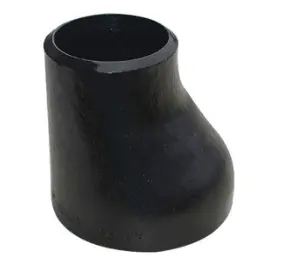
Concentric Reducers are cone-shaped pipe fittings that join two pipes of differing diameters on the same centerline. Due to their symmetrical shape, this velocity change is smooth and non-turbulent. That is why engineers require this fitting for the vertical portions of pipelines in oil refining, natural gas distribution, and water treatment systems.
Concentric vs. Eccentric: Knowing the Difference
Concentric reducers maintain the centers of both pipes in line, making them appropriate for vertical pump discharge lines. Eccentric reducers are used to offset the centerlines so that one side is flat – the proper option for horizontal suction lines where air pockets must be avoided. Make sure you check orientation before buying since ordering the incorrect kind might cause pump cavitation.
Materials and Standards That Matter
Oudi manufactures concentric reducers in three main materials, carbon steel (ASTM A234 WPB), stainless steel (ASTM A403 WP304/316L), and alloy steel (ASTM A234 WP11/WP22) for high-temperature operation. All diameters are manufactured in accordance with ASME B16.9 from NPS ½ to NPS 48 with wall schedules SCH 40 to XXS. Products also meet DIN, JIS, and BS standards, providing global purchasers options across regional code needs.
How to Choose the Right Steel Concentric Pipe Reducer for Your Project
Match Dimensions and Pressure Ratings
Always cross-reference pipe schedule, nominal pipe size (NPS), and operational pressure class before ordering. ASME B16.9 sets face-to-face dimensions by the outside diameter of the bigger pipe. This means that manufacturers may be interchangeable. One of the most typical field mistakes is schedule mismatch at the weld connection – ask for mill test data to check wall thickness on both ends.
Carbon Steel vs. Stainless Steel: Which to Choose
Steel Concentric Pipe Reducers are the standard option for oil & gas lines below 400°C due to their good mechanical performance and reduced cost. Stainless steel, especially 316L, has good chloride corrosion resistance and may be used in chemical processing and maritime conditions. WP11 and WP22 are alloy grades for high-pressure steam operation exceeding 500°C. Matching the fitting material to your process fluid and temperature profile significantly impacts the service life and overall cost.
When to Use Concentric Instead of Eccentric
Use a concentric reducer on vertical lines or where you need to have flow evenly distributed symmetrically. This is an industry norm that is extensively established by ASME standards and Hydraulic Institute recommendations. Do not use it on horizontal pump suction lines. If your P&ID says “CON RED,” check with the project engineer before buying.
Top Suppliers and Brands for Steel Concentric Pipe Reducers
Finding a trustworthy supplier comes down to three things: certifications, capacity, and communication. Here are the factors I recommend prioritizing.
Why Direct Manufacturer Sourcing Wins
Purchase straight from a qualified manufacturer, not via an intermediary, for shorter lead times, less markup, and immediate access to quality documents. Oudi has been in operation since 1998 and is ISO 9001:2000 certified and has the People’s Republic of China Special Equipment Manufacturing License and self-managed import/export authorization. They may also produce in regular bulk and bespoke quantities for projects. Their capacity is 16,000 tons per year.
Oudi’s product line includes concentric steel pipe reducers in carbon steel, stainless steel, and alloy steel, as well as bends, flanges, tees, caps, and steel concentric pipe reducers, providing EPC contractors a one-stop shop for complete piping bills of material.
How to Verify Supplier Credentials
Before committing to any supplier, request the following documents:
- ISO 9001 quality management system certificate (check the scope and expiry date)
- Special equipment manufacturing license (required for pressure vessel components in many jurisdictions)
- Material test reports (MTRs) or mill certificates aligned to ASTM or EN standards
- Third-party inspection reports from SGS, BV, or equivalent agencies
These documents should be available without hesitation from any reputable manufacturer. Oudi routinely provides full documentation packages to buyers in the United States, Europe, and Southeast Asia.
Evaluating Lead Times and MOQs
Factory-direct suppliers typically offer lower minimum order quantities (MOQs) for standard sizes and will negotiate lead times on large-volume orders. Oudi serves over 300 customers across more than 40 countries, which reflects consistent delivery performance. Ask prospective suppliers about production scheduling, inspection hold points, and shipping documentation preparation time — all three affect your project timeline.
Where and How to Buy Steel Concentric Pipe Reducers Online
Verified Platforms for B2B Sourcing
Procurement professionals commonly use platforms like Alibaba, Made-in-China, and GlobalSpec to identify suppliers, but these should be treated as starting points rather than final decisions. Verify that any listed supplier matches the certifications described above. Oudi maintains a product information site at https://blog.odpipefitting.com/ where technical specifications and material grades are published for buyer reference.
Requesting Quotes for Standard and Custom Sizes
When submitting an RFQ, provide the following minimum information: NPS size (large end × small end), wall schedule, material grade, end connection type (beveled end is standard for butt-weld applications), quantity, and delivery port. This level of detail allows the manufacturer to return an accurate price and lead time. Oudi accepts inquiries via email at oudi-04@oudiguandao.com and responds with technical datasheets alongside pricing.
Negotiating Price Without Sacrificing Quality
For repeat orders or large project packages, request a tiered pricing schedule. Bundle reducers with other fittings — elbows, tees, caps — from the same supplier to increase leverage on unit pricing. Avoid selecting suppliers purely on the lowest quote; documented defect rates and dimensional non-conformances in field installation cost far more than the savings on the purchase order.
Installation Tips and Maintenance Best Practices
Pre-Installation Checks
Before the weld, check that the bevel angle conforms to the process qualification record (PQR). ASME B16.9 defines a standard 37.5° ± 2.5° bevel for wall thicknesses less than 22mm. If you want thicker walls, you may require a compound bevel to achieve full-penetration weld quality. Visually check the bore for ovality or surface irregularities that might affect weld integrity.
Routine Inspection Schedule
Schedule visual and ultrasonic thickness examinations at 12-month intervals for high-pressure or high-temperature service. Particular attention to the reduction taper zone – this is the zone with the largest velocity gradient and is prone to erosion-corrosion over time in slurry or wet gas operation.
Identifying Replacement Indicators
Replace a concentric reducer when wall thinning exceeds the manufacturer minimum thickness tolerance. Replace a concentric reducer when surface pitting exceeds 10% of the nominal wall depth. Replace a concentric reducer when any weld has recordable symptoms under radiographic testing. Proactive replacement during scheduled shutdowns reduces unanticipated downtime and the increased cost of emergency procurement.
Conclusion
The key to selecting the proper concentric Steel Concentric Pipe Reducer is understanding your material, pressure class, and installation orientation and matching those criteria with a supplier with verifiable certificates and real manufacturing capability. Oudi has over 25 years of manufacturing expertise and a yearly capacity of 16,000 tons, fully compliant with ASME, DIN, JIS, and BS standards to serve the needs of oil, gas, chemical, and construction projects across the globe. If you are purchasing in quantity or seeking a certain aspect of the project, it is most trustworthy to collaborate with a registered manufacturer.
FAQ
1. What is the key difference between a concentric and eccentric reducer?
A concentric reducer aligns both pipe centerlines, producing a symmetric cone shape. An eccentric reducer offsets the centerlines so one side remains flat. Use concentric types on vertical lines; use eccentric types on horizontal pump suction lines to prevent air accumulation.
2. How do I determine the correct size for my piping system?
Size is defined by the large-end NPS and small-end NPS (e.g., 6" × 4"), plus the wall schedule. Face-to-face lengths are fixed by ASME B16.9 based on the larger diameter. Always match the reducer schedule to the connecting pipe schedule specified in your isometric drawing.
3. What certifications should I look for?
At minimum, require ISO 9001 certification for quality management and ASTM-compliant material test reports. For pressure service applications, a Special Equipment Manufacturing License adds a further layer of regulatory assurance. Third-party inspection reports from recognized agencies further confirm product compliance.
4. Can I order non-standard sizes?
Yes. Certified manufacturers like Oudi can produce custom NPS combinations and special schedules outside the standard ASME B16.9 range. Provide your drawing or dimensional specification with the RFQ and confirm lead time at the quotation stage.
5. What end connection types are available?
Beveled ends (BW) for butt welding are standard. Threaded or flanged ends are available for lower-pressure, maintenance-accessible applications, though butt-weld joints remain the industry standard for high-pressure oil, gas, and chemical service.
Get a Quote from Oudi — Certified Steel Concentric Pipe Reducer Manufacturer
Oudi has been manufacturing carbon steel, stainless steel, and alloy steel pipe fittings since 1998. As a verified Steel Concentric Pipe Reducer supplier, we hold ISO 9001 certification, a Special Equipment Manufacturing License, and supply 300+ clients across 40+ countries. Send your project specifications to oudi-04@oudiguandao.com and receive a detailed quote with full technical documentation.
References
1. ASME B16.9 Factory-Made Wrought Buttwelding Fittings — American Society of Mechanical Engineers, 2018.
2. ASTM A234/A234M Standard Specification for Piping Fittings of Wrought Carbon Steel and Alloy Steel for Moderate and High Temperature Service — ASTM International, 2022.
3. Hydraulic Institute Pump Intake Design Standards — Hydraulic Institute, 2017.
4. Piping Handbook, 7th Edition — McGraw-Hill, Nayyar, M.L., 2000.
5. ISO 9001:2015 Quality Management Systems — Requirements — International Organization for Standardization, 2015.
6. Industrial Piping and Equipment Estimating Manual — Gulf Professional Publishing, Westbrook, G., 2005.

Need help finding the right solution with our experts. Please contact us.

SINCE 1998 Your Reliable Pipeline Manufacturer



