Why Choose a Cost-Effective Carbon Steel Elbow for OEM Projects?
When planning large-scale OEM piping projects across petroleum, chemical processing, natural gas distribution, or water conservancy systems, selecting the right fitting can make or break your budget and timeline. A Cost-effective carbon steel elbow delivers the structural integrity and pressure-handling capabilities your project demands without the premium price tag attached to exotic alloys. These precision-engineered components balance affordability with performance, providing reliable service in demanding industrial environments while keeping procurement costs manageable. Understanding why these fittings remain the preferred choice for OEM applications helps procurement professionals make decisions that satisfy both engineering requirements and financial constraints.
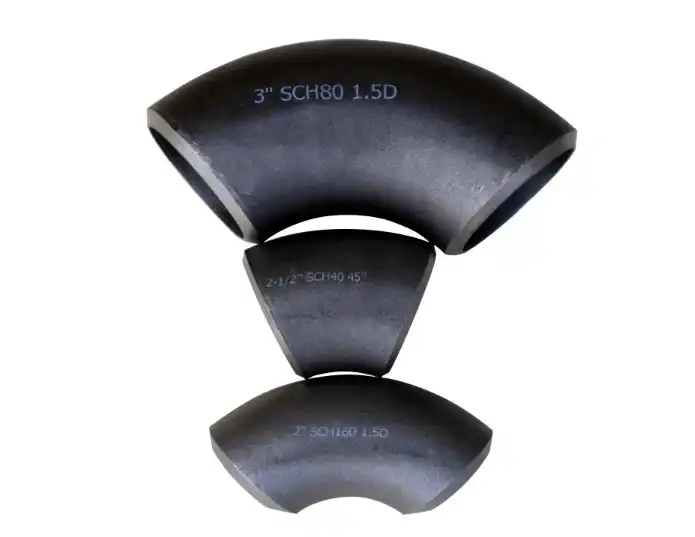
Understanding Cost-Effective Carbon Steel Elbows
What Defines a Cost-Effective Carbon Steel Elbow
Cost-effective carbon steel elbows are pipe fittings precisely manufactured from specific carbon steel grades and offer the best performance-to-price ratios. These parts change the flow of fluids in pipe systems while keeping the structure strong when pressure and temperature change. The main part of the material is usually ASTM A234 WPB grade carbon steel, which has the right amounts of carbon, manganese, phosphorus, sulfur, and silicon. This controlled chemistry makes the metal very strong, easy to weld, and machine without the need for expensive alloying elements. Most of the time, manufacturing involves hot forming, which shapes hot steel billets by pushing them or twisting them while they are still hot. This method makes elbows that are smooth, have a regular grain structure, and are more resistant to stress concentrations.
"Cost-effective" refers to more than just the initial buy price. In the right situations, these fittings have a longer useful life, which means they don't need to be replaced as often and don't cause as much downtime. Because they can be used with standard welding techniques, you don't need any special joining tools or highly trained workers. In settings that don't corrode, maintenance needs are kept to a minimum, which increases their economic value even more. After decades of making things, we've seen that Cost-effective carbon steel elbows in oil and gas installations usually last longer than 20 years when they're used according to the manufacturer's instructions.
Common Material Grades and Specifications
The choice of material is what makes elbow action possible. ASTM A234 WPB is still the standard for butt-weld fittings made of carbon steel that can handle both low and high temperatures. This grade can handle pressures and temperatures up to 400°C that are in line with pipe schedules. ASTM A105 is another grade that can be used for forged carbon steel uses that need better mechanical qualities, especially in threaded or socket-weld configurations. The A105 material used to make the 2000LB threaded elbows is highly resistant to high-pressure conditions, such as those found in oil, gas, and steam transfer systems.
To make sure that products from different manufacturers and regions can work together, elbow geometry is controlled by standards. In North America, most markets follow the ANSI B16.9 standards, which spell out wall thickness, center-to-end dimensions, and tolerances. The JIS B2313 norms are used in Japanese industry, while DIN 2605 and BS 1640 are used in Europe. As per these guidelines, there are both short-radius and long-radius designs. Long-radius elbows have a centerline radius that is 1.5 times the normal pipe diameter. Long-radius designs are better for high-speed uses because they have a longer curve that lowers pressure drop and erosion compared to short-radius designs.
The way elbows are made has a big effect on their properties. When hot forming, seamless elbows are made with uniform wall thickness and no weld seams. This makes them perfect for high-pressure situations where weld integrity is important. Welded elbows connect formed pieces with longitudinal or spiral welds, which save money for services with bigger widths and lower pressure. Instead of butt welding, socket welding and threaded joints can be used for installation. Threaded elbows make it possible to put together parts in the field without welding tools for holes up to 2 inches in diameter.
Applications Across Industrial Sectors
Cost-effective carbon steel elbows are used in a lot of heavy industries and are very reliable. Petroleum refineries use these valves a lot in oil distillation units, catalytic cracking systems, and product transfer lines where the flow of hydrocarbons needs to change direction. Cost-effective carbon steel elbows are used in the chemical processing industry to handle non-corrosive fluids in the production of fertilizer, polymers, and basic chemical synthesis. These fittings are used in natural gas transmission networks at compression stations, metering facilities, and distribution tie-ins where it is important to be able to change the direction of the flow.
In power plants, Cost-effective carbon steel elbows are used in the cooling circuits, condensate return networks, and steam distribution systems. The parts can handle the thermal cycle that comes with load-following processes and still stay leak-tight. These fittings are used in drum assemblies, downcomer circuits, and feedwater systems in boiler manufacturing, all of which have a direct effect on operational safety. Cost-effective carbon steel elbows are used in pumping stations, irrigation distribution networks, and flood control infrastructure as part of water conservation projects. These elbows are made to last for decades thanks to protective coatings that prevent corrosion.
In shipbuilding, these valves are used in ballast systems, fire suppression networks, and machinery cooling circuits where limited room calls for small route options. Cost-effective carbon steel elbows are used in construction projects' temporary dewatering systems, concrete pumping lines, and permanent building utility installations. Cost-effective carbon steel elbows are popular in the building industry because they are strong, easy to make, and readily available for a wide range of project sizes and requirements.
How to Choose the Right Carbon Steel Elbow for OEM Projects
Analyzing Project Requirements
To choose the right elbow, you must first have a full understanding of the working conditions. Pressure values must match the design pressures of the system plus the right safety limits, which are usually given as a percentage above the highest pressure that is expected to be used. Temperature factors include more than just normal operating values. They also include startup transients, emergency situations, and seasonal changes. For moderate temperature ranges, carbon steel keeps its mechanical properties well, but above 425°C, it loses strength, so alloys are needed for higher temperature applications.
Environmental factors have a big effect on the choice of materials. Corrosion potential is based on the pH, chloride content, hydrogen sulfide concentration, and oxygen amounts of the stream itself. Conditions outside the surface, like humidity, exposure to salt spray, and the chemistry of the earth, can cause it to break down. We make elbows with different protective coatings, such as epoxy, polyethylene, and fusion-bonded systems, that make them last longer in harsh environments. To make sure of seamless integration, make sure that the new system works with the old one. This means paying attention to dimensional standards, connection types, and material compatibility to stop galvanic corrosion at metal junctions that are not the same.
Material Grade and Dimensional Standards
Matching the grade of the material to the conditions of use improves both efficiency and cost. Standard ASTM A234 WPB material works well in a wide range of situations with normal temperatures and pressures. Better grades, like A234 WP11 and WP22, which contain molybdenum and chromium, are made for high-temperature applications that go beyond what normal carbon steel can handle. The choice of dimensional standards depends on where the project is located and what the client wants. For example, ANSI standards are usually used for projects in North America, while DIN or BS standards are used for installations in Europe.
The choice of radius affects both the hydraulic function and the ease of fitting. Long-radius elbows reduce pressure drop and flow turbulence, which lowers the amount of energy needed to pump and the chance of erosion. These designs are especially useful for slurry services, high-velocity gas uses, and systems where a drop in pressure directly affects how well the process works. Short-radius elbows save room in pipe systems that are already crowded, but they cause more stress and higher pressure losses. Specifying the wall thickness through schedule numbers strikes a balance between the ability to contain pressure and the cost of materials and the difficulty of welding.
Balancing Quality and Cost Considerations
Total ownership costs, not just the initial buy price, are what good procurement plans look at. Cheap elbows that don't have the right certifications or measurements can cause expensive changes in the field, installation delays, and even failure. Some things that show quality are material certifications that link chemical and mechanical properties to heat-specific mill test reports, dimensional inspection records that show the product meets standards, and records of non-destructive tests that show the product doesn't have any manufacturing flaws.
When judging a supplier, you should look at their ability to make things, their quality management methods, and how reliable their service is. Getting ISO 9001 certification shows that you are committed to controlling quality in a planned way throughout the whole production process. Regulatory authorities issue special equipment manufacturing licenses to show that people are technically qualified to make pressure-retaining components. Production capacity affects delivery times and bulk prices. Manufacturers who keep a lot of stock on hand and produce more than 16,000 tons a year offer more reliable supply chains. We've been able to keep making things nonstop since 1998, and our consistent quality and quick technical support have helped us serve over 300 customers in 40 countries.
Comparing Carbon Steel Elbows with Alternatives
Carbon Steel Versus Stainless Steel
Choosing between carbon steel and stainless steel depends on how resistant you need the material to be to rust and how much money you have to spend. Stainless steel metals with chromium and nickel are better at resisting oxidation, pitting, and stress corrosion cracking in harsh chemical conditions. These qualities are very important in industries like food processing, pharmaceutical production, and naval use, where corrosion resistance is needed to keep materials from getting contaminated or to withstand saltwater. Carbon steel is about as strong as stainless steel, but it costs a lot less. This makes it a good choice for situations where rust can be controlled with coats, cathodic protection, or internal linings.
A study of lifecycle costs shows that in moderately corrosive environments, Cost-effective carbon steel elbows with the right corrosion protection often have lower total ownership costs than stainless steel options. When compared to stainless steel fittings of the same type, carbon steel parts usually save between 40% and 60% on the initial cost of materials. Maintenance costs, such as replacing coatings on a regular basis, must be weighed against the higher price of stainless materials. The best material for a project is chosen based on factors like how easy it is to do maintenance, what would happen if it broke, and how long it is expected to last. We use decades of field performance data from sites around the world to help our clients through this research.
Manufacturing Methods: Seamless, Welded, and Forged Options
The choice of manufacturing process affects how well the elbow works and how much it costs. When hot forming is used to make seamless joints, the wall width is the same all the way through the part, and there are no longitudinal welds. This design gets rid of possible weld flaws that could cause failure, which is why seamless elbows are better for high-pressure, critical applications where the highest level of reliability is worth the extra cost. The hot forming process makes good grain flow patterns that make the material more resistant to wear under cycle loading conditions that are common in pulsating flow services and pipes for reciprocating compressors.
Welded elbows connect formed pieces using automatic or human welding methods. They offer cost benefits, especially for bigger diameters where making seamless joints is technically difficult. When done correctly with skilled welders and a thorough review, modern welding technology makes joints that are very close to the properties of the base metal. These parts work well in low-pressure situations and when lowering costs is the main factor in buying decisions. Filet welds connect the fitting socket to the pipe ends that are installed, making socket-welding elbows easier to install in small-bore plumbing systems. This way of connecting makes field assembly easier and is commonly used in monitoring and utility lines.
Forged elbows manufactured from steel billets that are heated and pressed into precise molds have a finer grain structure and better mechanical properties. This way of making things makes fittings that can handle the high temperatures and pressures that are common in certain situations. Forged threaded elbows can be put together in the field without the need for welding tools. However, threaded connections are usually limited to smaller sizes and lower pressures than welded connections. For example, the 2000LB threaded elbows we make from ASTM A105 forged carbon steel show how well the right forging and heat treatment processes can handle pressure.
Procurement Insights for OEM Clients
To find suppliers of Cost-effective carbon steel elbows for OEM projects, you need to find ones that can offer technical know-how, quality assurance, and business flexibility. Global manufacturers that sell to international markets have benefits like following multiple regional standards, offering expert help in multiple languages, and having well-established export logistics. Local distributors can get standard items to you quickly, but they might not be able to customize them or have the technical knowledge to meet your specific needs. These factors are balanced by hybrid sourcing strategies, which build relationships with capable makers for project-specific needs and keep distributor accounts for everyday things and emergency needs.
By buying in bulk, you can save a lot of money thanks to big savings and better logistics. Buying more is easier when you combine orders from different business units or combine needs from different project stages. Minimum order quantities depend on the manufacturer and the complexity of the product. Standard items can usually be bought in smaller amounts, but custom specifications may need large minimums to cover the costs of tools and setup. Annual blanket orders with planned releases balance the costs of keeping inventory with the benefits of volume prices. This gives budgets peace of mind and supply certainty.
For over 20 years, Oudi has been making things in Cangzhou, China. The city is ideally located near important traffic hubs, such as highways and the Tianjin Port. Our 66,600-square-meter factory has high-tech production tools and skilled technicians who can make elbows, flanges, tees, reducers, and caps that meet American, Japanese, German, and British standards. Our ISO 9001:2000 certification and People's Republic of China special equipment manufacturing license show that we are committed to systematic quality management. Our annual production capacity of 16,000 tons ensures a steady supply for large projects. We keep the power to import and export on our own, which makes direct communication easier and speeds up international transactions.
Manufacturing Process and Quality Assurance
Hot Forming Production Methods
Most Cost-effective carbon steel elbows are made using hot forming methods, which turn hot steel billets into finished fittings. In the hot pushing method, heated pipe sections are fed through progressive dies that bend the material to a right angle while keeping the thickness of the wall. This method makes elbows that are seamless and have smooth inside surfaces that reduce flow resistance and the chance of erosion. The heating temperature, pushing speed, and cooling rate are some of the process control factors that have a big effect on the end mechanical properties and accuracy of the dimensions. We keep a tight grip on the process by writing down steps, training operators, and watching what they do in real time to make sure that the results are the same from one production run to the next.
For another way to shape things, hot pipe sections can be bent around mandrels or through induction heating systems that heat only the areas that need to be bent. This method works for bigger diameters and special materials where pushing forces would be too high for the equipment. Controlled cycles of heating and cooling stop grains from growing and keep the metal's desired properties. Both of these hot forming methods make better products than cold forming methods, which can work-harden materials and leave behind stresses that can lower their service life. When you hot form something, it becomes seamless. This means that there are no linear weld joints or heat-affected zones, so the parts have the same qualities all the way through.
Quality Control and Compliance Certifications
Engineering specifications and regulatory requirements are met by Cost-effective carbon steel elbows thanks to thorough quality assurance programs. Dimensional inspection checks important measurements like outside width, wall thickness, center-to-end distance, and angle accuracy against the standard deviations that apply. Coordinate measuring machines, laser thickness gages, and precise calipers are some of the measuring tools that can be used to objectively check for conformance. An examination of the surface finish finds flaws in the manufacturing process, like laps, seams, or inclusions that could act as stress collectors or corrosion start sites.
Techniques for non-destructive examination give information about internal soundness without damaging the component. Sound wave propagation analysis is used in ultrasonic testing to find internal flaws like laminations, shrinking holes, and inclusions. By showing magnetic field distortion, magnetic particle inspection can find flaws on the surface and close to the surface of ferromagnetic materials. Liquid penetrant testing finds flaws that break the surface by using capillary action and contrast enhancement. Hydrostatic pressure testing puts elbows under pressures that are higher than their design values. This makes sure that the structure is strong enough and that there are no leaks in the system when it is used in a real-life situation.
Quality elbows come with material traceability paperwork that shows they are in line with the grades and features that were stated. Mill test records include information on the chemical make-up and mechanical properties of each output heat. This lets you connect the features of finished fittings to those of the source material. Dimensional inspection reports show that samples actually meet the standards by using measurements to back up the claims. Non-destructive examination records show that there are no defects that meet the acceptance standards set out in the project specs or industry codes. These certificates give people who are in charge of buying things confidence that the materials they receive will work as planned.
Compliance certifications show that a manufacturer is dedicated to managing quality in a systematic way and following the rules set by regulators. Getting ISO 9001 certification means that quality management systems have been put in place that focus on the customer, leadership, the process method, and constant growth. Government agencies give special equipment manufacturing licenses to companies that show they have the technical know-how, production skills, and quality systems needed to make pressure-retaining components. These qualifications help procurement professionals lower supply chain risks by separating serious makers from suppliers who don't have documented capabilities. Our certifications show that we have been making high-quality products for decades and are dedicated to always meeting customer expectations in tough applications around the world.
Conclusion
For OEM projects, choosing Cost-effective carbon steel elbows requires a smart choice that balances performance needs with budget facts. When ordered from qualified makers and used correctly, these precision-engineered fittings work well in oil and gas, chemicals, natural gas, water conservation, construction, shipping, and power generation. Procurement pros can make choices that minimize total ownership costs by learning about material grades, dimensional standards, manufacturing methods, and quality assurance practices. By comparing carbon steel to other materials and looking at seamless vs. welded construction options, you can make sure that the properties of the part match the needs of the application. Partnering with well-known manufacturers that offer full quality systems, technical support, and proven global supply capabilities lowers risks and makes prices competitive by saving money on volume. Understanding the information in this guide gives OEM clients the skills they need to find Cost-effective carbon steel elbows that meet engineering needs, stay within budget, and perform reliably for long service lives.
FAQ
1. What Makes Carbon Steel Elbows Cost-Effective Compared to Other Materials?
The low cost of the material and good performance in the right situations make Cost-effective carbon steel elbows a cost-effective choice. The raw material is a lot cheaper than stainless steel or rare metals, but it is just as strong and can handle the same amount of pressure. Over the past few decades, the ways that carbon steel is made have been improved, making production more efficient and lowering costs even more. When the risk of rust can be controlled with protection coatings or environmental controls, Cost-effective carbon steel elbows are a great choice because they don't cost as much as corrosion-resistant metals.
2. How Do I Determine Appropriate Pressure Ratings for My Project?
Ratings for pressure depend on the type of material, the thickness of the wall, the temperature, and any code requirements that apply. To find out what pressures are acceptable at working temperatures, look at ASME B31.3 for process piping or ASME B31.1 for power piping. Choose schedule numbers that give you enough wall thickness for the design pressure plus a safety margin. Make sure that the pressure ratings for elbows are the same as or higher than the ratings for straight pipes to keep the system working properly. We help with the technical side of matching project conditions with the right specifications to make sure installations are safe and reliable.
3. What Certifications Should I Require from Elbow Suppliers?
Quality providers give mill test reports that show the chemistry and mechanical properties of the material, measurement inspection reports that show it meets standards, and non-destructive examination records that show it doesn't have any flaws. Manufacturer licenses and certifications, such as ISO 9001 quality management systems and special equipment manufacturing licenses, show that they follow the rules and keep quality high. These papers make it possible to check that the goods being sent meet technical requirements and will work properly when they are put to use.
Partner with Oudi for Reliable Carbon Steel Elbow Solutions
Oudi has been making high-quality products for over 20 years and is a reliable source for OEM clients looking for Cost-effective carbon steel elbow suppliers for tough industrial uses. We have a wide range of products that meet American, Japanese, German, and British standards for carbon steel, stainless steel, and alloy steel. This means we can meet the needs of a wide range of projects. Our strategically located Cangzhou facility can produce up to 16,000 tons of goods every year, which guarantees a steady supply that keeps your projects on track. We have strict quality control throughout the whole production process. Our technical skills are backed up by ISO 9001:2000 certification and the People's Republic of China special equipment manufacturing licenses. Every elbow goes through a thorough review that includes checking the dimensions and performing non-destructive tests that are acceptable for the level of service criticality. We've been exporting to over 300 customers in 40 countries, so we know about international standards and logistics, which makes it easier to buy things across borders. Contact our team at oudi-04@oudiguandao.com to talk about your specific needs with experienced technical experts who can help you find the best solutions that meet both your needs and your budget. Find out why some of the world's biggest OEMs choose Oudi as their go-to maker for Cost-effective carbon steel elbows used in important pipe projects.
References
1. American Society of Mechanical Engineers (2020). ASME B16.9: Factory-Made Wrought Butt-Welding Fittings. New York: ASME Press.
2. ASTM International (2021). ASTM A234/A234M: Standard Specification for Piping Fittings of Wrought Carbon Steel and Alloy Steel for Moderate and High Temperature Service. West Conshohocken: ASTM International.
3. Kumar, S. and Rao, P. (2019). Material Selection and Design of Pressure Vessels and Piping Components. Journal of Pressure Vessel Technology, 141(3), pp.034501-034512.
4. Mohitpour, M., Golshan, H. and Murray, A. (2007). Pipeline Design and Construction: A Practical Approach (3rd ed.). New York: ASME Press.
5. Singh, R. (2018). Applied Welding Engineering: Processes, Codes, and Standards (2nd ed.). Oxford: Butterworth-Heinemann.
6. Zarco, A. and Lopez, M. (2022). Comparative Lifecycle Cost Analysis of Piping Materials in Industrial Applications. International Journal of Industrial Engineering, 29(4), pp.445-461.

Need help finding the right solution with our experts. Please contact us.

SINCE 1998 Your Reliable Pipeline Manufacturer



