Why Choose an OEM Carbon Steel Elbow Supplier?
If the project you’re working on involves a pipeline that can’t afford to fail, then you don’t want to take any chances with the supplier of your carbon steel elbow. Choosing a reliable Carbon steel elbow supplier ensures you receive components manufactured to precise specifications, supported by traceable material certifications and internationally recognized quality systems. If you’re in oil refining, chemical processing, or power generation, an OEM carbon steel pipe fitting manufacturer can offer consistency, customization, and assurance of compliance that generic distributors just can’t provide at scale.
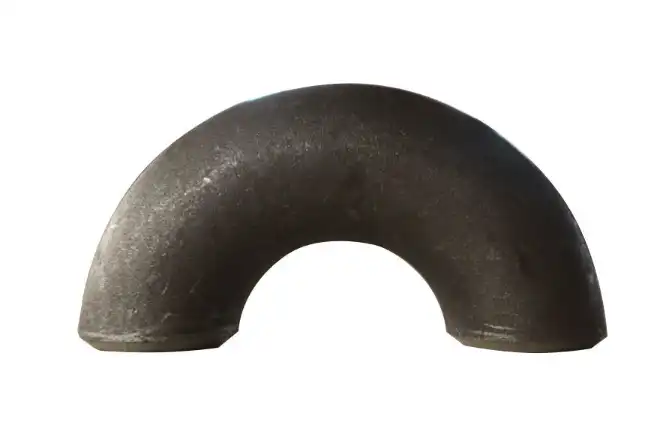
Understanding Carbon Steel Elbows and Their Market Demand
What Exactly Does a Carbon Steel Elbow Do?
A carbon steel elbow is a pipe fitting that changes the flow of fluid or gas in a predetermined direction — most commonly at 45°, 90° or 180° angles. That sounds simple, but this part is exposed to considerable mechanical stress, pressure fluctuations, and corrosive exposure every day. One substandard elbow in oil refineries, chemical plants, and water treatment facilities can lead to system-wide failure. That fact explains the steady growth in worldwide demand for certified carbon steel pipe elbows as infrastructure building continues in North America, the Middle East, and Southeast Asia.
Which Standards Govern Product Safety?
Governing standards include ASME B16.9 for factory-made wrought butt-welding fittings, ASTM A234 for material grade specification, and DIN 2605 for European dimensional specifications. These frameworks establish wall thickness, pressure ratings, and bend radius limitations. Products built outside these constraints risk premature cracking or joint separation – undesirable results in high-pressure pipes. OEM suppliers create production processes around these standards rather than retrofitting compliance at the inspection stage, which is a key operational distinction.
Comparing Carbon Steel Elbows from OEM vs. Other Suppliers
Not every elbow on the market bears similar integrity. The manufacturing method, material traceability, and supplier accountability vary considerably between OEM producers and generic trading companies.
| Criteria | OEM Manufacturer | Generic Distributor |
|---|---|---|
| Manufacturing Type | Seamless & welded, in-house | Sourced from multiple mills |
| Material Traceability | Full Mill Test Reports (MTR) | Often incomplete |
| Certification | ISO 9001, special equipment license | May vary |
| Customization | Full specification matching | Limited |
| Lead Time Control | Direct production scheduling | Dependent on third parties |
| Volume Pricing | Transparent, scalable | Variable, markup-based |
Seamless elbows are made by hot pushing or hot heating bending process, which provides excellent pressure resistance and makes them ideal for high-temperature oil and gas applications. Welded elbows, available in both butt-weld and socket-weld configurations, serve broader construction and water conservancy projects. A reliable Carbon steel elbow supplier and OEM carbon steel elbow manufacturer can produce both categories under unified quality control — something a trading intermediary cannot guarantee.
Why OEM Suppliers Are the Preferred Choice for High-Quality Carbon Steel Elbows
Material Selection: Why the Raw Input Determines Everything
OEM producers source carbon steel from verified mills and conduct incoming material inspections before production begins. Grades such as ASTM A234 WPB, WPC, and alloy variants must meet chemical composition and mechanical property thresholds. When a supplier controls material intake, they eliminate the single largest variable in product inconsistency. Procurement teams should always request mill test reports and confirm that the OEM's quality system covers raw material verification — not just finished product inspection.
Mold Design: Where Dimensional Accuracy Is Won or Lost
The geometry of a carbon steel elbow — its centerline radius, wall thinning ratio, and end-face perpendicularity — depends directly on tooling precision. Short-radius elbows, with a bend radius equal to the nominal pipe diameter, require tighter forming control than long-radius variants. OEM manufacturers invest in calibrated forming tools and maintain dimensional records across production batches. This matters enormously when fittings must integrate with existing pipeline infrastructure where even minor dimensional deviation causes misalignment and weld rejection.
Testing Standards: The Final Gatekeeper Before Shipment
Rigorous testing separates reliable OEM supply from commodity product. Industry-standard inspection protocols include hydrostatic pressure testing, nondestructive examination (NDE) such as ultrasonic or radiographic testing, and hardness verification. At Oudi, the full inspection system covers every stage — from raw material intake through production process monitoring to finished product release. As an experienced Carbon steel elbow supplier, Oudi uses advanced detection equipment to ensure that each fitting leaving the facility meets the pressure class and wall thickness requirements specified in the purchase order. These three pillars — material selection, mold design, and testing standards — collectively define the quality gap between OEM-sourced components and generic market alternatives. Procurement managers who evaluate suppliers against all three criteria consistently report lower warranty claims and reduced unplanned maintenance costs over project lifecycles.
How to Effectively Choose and Collaborate with an OEM Carbon Steel Elbow Supplier
What Certifications Should You Verify First?
Before committing to any OEM pipe fitting supplier, request documentary evidence of ISO 9001 quality management system certification and any applicable special equipment manufacturing licenses. In China, the Special Equipment Manufacturing License issued under national regulatory authority confirms that a producer meets legal safety production standards — a non-negotiable credential for oil, gas, and power sector procurement. Oudi has held ISO 9001:2000 certification and carries the relevant special equipment license, credentials that have supported successful exports to over 40 countries across Europe, North America, Africa, Southeast Asia, and the Middle East.
How Do You Align Project Specs with Supplier Capability?
A productive OEM collaboration begins with a precise needs assessment. Share your pipeline design specifications — nominal bore size, pressure class, angle configurations, material grade, and applicable standards (ANSI, JIS, DIN, BS) — with the supplier's technical team early. Capable OEM manufacturers can produce a complete range of carbon steel, stainless steel, and alloy steel fittings, including elbows, flanges, tees, reducers, and caps within a unified supply chain. Consolidating your fitting sourcing through one qualified manufacturer simplifies logistics, maintains dimensional consistency across fittings, and builds a supply relationship where the manufacturer understands your recurring project needs. Long-term partnerships with transparent communication, defined quality assurance agreements, and responsive after-sales support reduce procurement cycle time on repeat orders. Suppliers who have served 300-plus clients across diverse industrial sectors develop institutional knowledge about how to manage specification changes, expedite critical deliveries, and resolve technical queries without escalation delays.
Conclusion
Choosing the right OEM carbon steel elbow supplier is a procurement decision with long-reaching operational consequences. Verified certifications, disciplined material intake, precision mold engineering, and comprehensive testing protocols collectively determine whether a fitting performs reliably across years of demanding service. Oudi has manufactured carbon steel pipe fittings since 1998, operating from a 66,600-square-meter facility with an annual production capacity of 16,000 tons. Our product range covers American, Japanese, German, and British standards across carbon steel, stainless steel, and alloy materials. For procurement professionals who need consistent quality, competitive pricing, and proven global export experience, the case for OEM sourcing is clear.
FAQ
What pressure ratings are standard for carbon steel elbows?
Carbon steel elbows manufactured to ASME B16.9 are available in pressure classes ranging from Class 150 through Class 2500, corresponding to schedule designations such as SCH 40, SCH 80, and SCH 160. The applicable pressure class depends on operating temperature, fluid type, and system design requirements.
How do I verify an OEM supplier's quality credentials?
Request copies of the ISO 9001 certificate, mill test reports for recent production batches, and any special equipment manufacturing licenses. Cross-reference certificate numbers with issuing bodies where possible. Reputable OEM manufacturers welcome third-party inspection arrangements and provide full material traceability documentation as standard practice.
Can OEM manufacturers fulfill bulk customized orders?
Yes. Established OEM pipe fitting manufacturers with substantial production capacity — such as Oudi's 16,000-ton annual output — are specifically structured to handle large-volume, customized orders. Customization options typically include specific material grades, non-standard dimensions, surface treatments, and marking requirements aligned with project specifications.
What is the difference between seamless and welded carbon steel elbows?
Seamless elbows are formed from solid steel billets without a weld seam, offering higher pressure resistance and preferred use in critical high-temperature applications. Welded elbows are fabricated from plate or pipe sections and are cost-effective for lower-pressure systems. OEM manufacturers produce both types under controlled quality conditions.
Partner with Oudi — A Trusted Carbon Steel Elbow Supplier and Manufacturer
Oudi has delivered certified carbon steel pipe fittings to industrial clients across more than 40 countries since 1998. As a trusted Carbon steel elbow supplier, we provide a full range of ANSI, JIS, DIN, and BS standard elbows, flanges, tees, and reducers — available in carbon steel, stainless steel, and alloy steel. Whether you need bulk OEM orders, customized specifications, or technical consultation, our team is ready to support your procurement process. Reach our export team directly at oudi-04@oudiguandao.com to request a quote or product catalog.
References
1. American Society of Mechanical Engineers (ASME). ASME B16.9: Factory-Made Wrought Buttwelding Fittings. ASME, 2018.
2. ASTM International. ASTM A234/A234M: Standard Specification for Piping Fittings of Wrought Carbon Steel and Alloy Steel for Moderate and High Temperature Service. ASTM International, 2021.
3. Nayyar, Mohinder L. Piping Handbook, 7th ed. McGraw-Hill, 2000.
4. Smith, Peter, and R. W. Zappe. Valve Selection Handbook, 5th ed. Gulf Professional Publishing, 2004.
5. International Organization for Standardization. ISO 9001:2015 Quality Management Systems — Requirements. ISO, 2015.
6. Becht, Charles. Process Piping: The Complete Guide to ASME B31.3, 4th ed. ASME Press, 2014.

Need help finding the right solution with our experts. Please contact us.

SINCE 1998 Your Reliable Pipeline Manufacturer



