Why Specify Corrosion-resistant carbon steel elbow in Harsh Systems?
When a pipeline malfunctions in an oil refinery or chemical processing facility, the fallout is anything but just a big repair cost. Unplanned shutdowns, safety mishaps, and regulatory fines may cost industrial operators millions of dollars yearly. And one often neglected component at the heart of many such failures is the pipe elbow. One of the most significant considerations a procurement engineer can make is to specify a corrosion-resistant carbon steel elbow in hostile service settings. It defines the life of the system, the frequency of maintenance, and the safety of operation in oil and gas, chemical, and water conservancy applications.
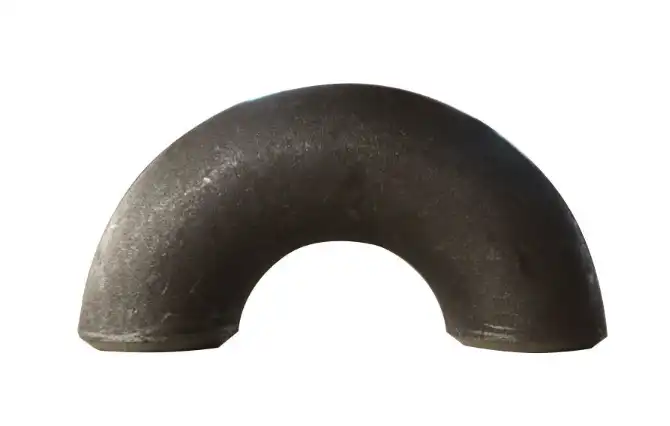
What Exactly Is a Corrosion-Resistant Carbon Steel Elbow?
A carbon steel elbow is a pipe fitting used to change the direction of fluid flow in a pipeline system at a certain angle, usually 45°, 90°, or 180°. Its shape enables pipeline designers to thread their way around spatial limits while maintaining flow efficiency. However, ordinary carbon steel is intrinsically susceptible to oxidation and chemical attack in severe conditions.
There are two basic methods of obtaining corrosion resistance: via protective surface treatments and by controlled alloying. Common methods include hot-dip galvanizing, epoxy lining, and ceramic coating. These barrier layers are used to protect the base metal from chloride ions, acidic chemicals, and moisture. From an alloying point of view, lsmalladditions of chromium or manganese improve the electrochemical stability of the steel, but not to the extent that it becomes stainless steel. This produces a fitting that has the same mechanical strength as carbon steel, including its high tensile strength and ability to withstand pressure, but a dramatically improved life in corrosive use. Understanding these processes helps procurement managers and engineers to choose the appropriate protective solution for their particular system chemistry, whether it’s galvanized elbows for water infrastructure or ceramic coated versions for abrasive slurry lines.
Whceramic-coatedosion-Resistant Carbon Steel Elbows for Harsh Environments?
Harsh service conditions have one thing in common – they assault pipeline materials from many angles simultaneously. Higher temperature accelerates the electrochemical processes. Chloride-rich saltwater causes pitting corrosion to penetrate deeply into exposed metal. Chemical facilities have acid process fluids that wear away pipe walls during directional shifts at the elbows. Erosion-corrosion is a very damaging kind of combined assault caused by abrasive particles in gas streams.
Where Do These Elbows Deliver the Greatest Value?
Those businesses where pipeline integrity is not optional have the most to gain from specifying corrosion-resistant carbon steel elbows. The fittings used in oil and gas extraction are exposed to sour service conditions when hydrogen sulfide is present, and must resist sulfide stress cracking. Chemical processing plants use powerful acids and alkalis that would attack bare carbon steel in a month or less. In marine and ship construction applications, pipework is subjected to constant salt spray and immersion in seawater. Power generating boiler systems operate with high-temperature cycles which are conducive to oxidation scaling. The basic operating benefits of choosing the correct corrosion-resistant elbow for these situations are:
- Extended service life – The protected elbows in chemical duty may have a service life two to four times longer than uncoated alternatives, thereby decreasing the overall replacement costs during a plant’s operating life.
- Fewer unscheduled shutdowns: Corrosion at elbow joints is a frequent cause of emergency shutdowns because of leaks. Using resistant fittings greatly reduces the likelihood of mid-cycle failures that stop output.
- Better worker and environmental safety: Leaking elbow conveying hydrocarbons or dangerous substances is a direct safety liability. Durable fittings limit leak potential and help operators stay in line with regulations.
- Lower lifetime maintenance costs: Fittings’ known degradation rates allow for longer inspection intervals, freeing up maintenance resources for more important duties.
These benefits immediately transfer into competitive operating cost structures, which is why EPC contractors and plant engineers across the oil, chemical and power industries are increasingly specifying corrosion-resistant variations as a regular procurement requirement.
How Do Corrosion-Resistant Carbon Steel Elbows Compare to Alternative Materials?
Material choices made during specification commit performance outcomes and budgetary provision for decades. The table below is a side-by-side comparison to support that conclusion.
| Criteria | Corrosion-Resistant Carbon Steel | Standard Stainless Steel (304/316) | Galvanized Carbon Steel | Thermoplastic (CPVC/PP) |
|---|---|---|---|---|
| Mechanical Strength | High | High | Moderate-High | Low |
| Corrosion Resistance | Good–Excellent (coating-dependent) | Excellent | Moderate | Good (chemical-specific) |
| Operating Temperature | Up to 600°C+ | Up to 870°C | Up to 200°C | Up to 100°C |
| Pressure Rating | High | High | Moderate | Low |
| Material Cost | Low–Moderate | High | Low | Low |
| Maintenance Demand | Low (with proper coating) | Very Low | Moderate | Low |
| Typical Application | Oil, gas, chemical, power | Pharmaceutical, marine, food | Water supply, HVAC | Low-pressure chemical lines |
While stainless steel has better inherent corrosion resistance, it entails a large price premium – usually three to five times the price of coated carbon steel equivalents. For budget oil, gas and water conservancy projects, a well-specified corrosion-resistant carbon steel elbow provides equal performance at a fraction of the material cost, a key benefit in large-volume industrial projects.
How Should You Select and Maintain These Elbows Correctly?
Selecting the improper elbow specification loses funds and installation work. The decision process should start with a clear specification of operational parameters.
What System Variables Drive the Specification?
The baseline mechanical demand is set by the operating temperature and pressure. The chemical compatibility study defines which coating or alloying method is applicable. Fluid velocity and particle content dictate the choice between long-radius and short-radius geometry—long-radius elbows minimize turbulence and erosion during directional changes, making them desirable in abrasive or high-velocity operation. Wall thickness and schedule choices follow pressure rating criteria per ANSI/ASME B16.9 or comparable standards. Procurement teams should cross-reference appropriate standards—ANSI, DIN, JIS, or BS—to guarantee dimensional compliance with existing pipe systems. Maintenance recommended practices are basic but frequently disregarded. Periodic visual and ultrasonic thickness examinations at elbow outer-radius wear zones detect localized thinning before it becomes a leak channel. Keeping coating integrity records and arranging touch-up treatments at specified turnarounds enhances service life dramatically.
What Should Buyers Know Before Procuring These Fittings?
Procurement choices of this sort are not only about pricing per unit. Supplier trustworthiness, certification validity, and manufacturing consistency are all equally important. The buyers should ensure that the supplier is certified to ISO 9001 quality management and has specific equipment production permits, if applicable. These certifications ensure that manufacturing is controlled by quality systems from raw material input to completed product inspection. Another sign of a supplier’s technical seriousness is their nondestructive testing capacity (e.g., ultrasonic and radiographic inspection). Oudi has been ISO 9001:2000 certified since our establishment in 1998, as well as a People’s Republic of China special equipment manufacturing license. Our Cangzhou factory occupies an area of 66,600 square meters with an annual production of 16,000 tons. We provide 90°, 45°, and 180° elbow configurations in both seamless and welded constructions, in carbon steel, stainless steel, and alloy steel, to American, Japanese, German, and British standards. Our entire inspection system and nondestructive fault detection cover all manufacturing stages and our products are serving more than 300 clients in over 40 countries. Availability of project customization depends on non-standard specs. Lead times for bulk orders may vary depending on the intricacy of the specification and the quantity ordered; therefore, it is best to connect with your supplier’s technical team as soon as possible.
Conclusion
A specification of a corrosion-resistant carbon steel elbow is a technically and financially smart option for any system subject to chemical, thermal or maritime stress. The performance data and comparison analysis presented here consistently demonstrate that coated or alloyed carbon steel elbows provide the best combination of mechanical capability, corrosion protection, and procurement economy. To summarize, the difference between fittings that fail prematurely and those that don’t is validated supplier credentials, international standards and strict quality control systems. Procurement managers and engineers who base their specifications on these criteria will build systems that are safer, less expensive and longer-lived over the whole service life.
FAQ
Is carbon steel inherently corrosion-resistant?
Standard carbon steel is not corrosion-resistant on its own. Corrosion resistance is introduced through protective coatings such as galvanizing, epoxy lining, or ceramic layers, or through controlled alloying additions. Without these measures, carbon steel oxidizes readily in wet or chemically aggressive environments.
Are these elbows suitable for seawater service?
Coated carbon steel elbows can perform in seawater applications when the protective layer is properly selected and maintained. Epoxy or ceramic coatings provide effective chloride barriers. However, for continuous seawater immersion under high pressure, buyers should verify the specific coating specification with their supplier and confirm compatibility with their operating conditions.
What are typical lead times for bulk orders?
Lead times vary based on order volume and specification complexity. Standard configurations generally ship within four to six weeks from order confirmation. Custom dimensions or special material grades may require additional production time. Early engagement with your supplier's technical team helps align schedules with project timelines.
Which standards apply to these fittings?
Common applicable standards include ANSI/ASME B16.9 for bbutt-weldfittings, as well as DIN, JIS, and BS equivalents. Always confirm that your supplier's production aligns with the standard specified in your project documentation.
Partner with Oudi for Your Next Corrosion-Resistant Carbon Steel Elbow Order
Oudi has manufactured certified pipeline fittings since 1998, serving clients across oil, gas, chemical, and power industries in over 40 countries. As a trusted corrosion-resistant carbon steel elbow supplier, we offer ANSI, DIN, JIS, and BS-compliant products backed by ISO 9001 certification and rigorous full-inspection protocols. Request your bulk quotation or technical datasheet today by contacting our team directly at oudi-04@oudiguandao.com. We respond promptly and tailor solutions to your project requirements.
References
1. Uhlig, H. H., & Revie, R. W. — Corrosion and Corrosion Control: An Introduction to Corrosion Science and Engineering, Wiley, 2008.
2. NACE International — Corrosion Costs and Preventive Strategies in the United States, NACE, 2002.
3. American Society of Mechanical Engineers — ASME B16.9: Factory-Made Wrought Buttwelding Fittings, ASME, 2018.
4. Schweitzer, P. A. — Corrosion Engineering Handbook: Corrosion of Linings and Coatings, CRC Press, 2006.
5. Koch, G. H., et al. — Corrosion Costs and Preventive Strategies in the United States, Federal Highway Administration Report FHWA-RD-01-156, 2001.
6. Davis, J. R. — Corrosion: Understanding the Basics, ASM International, 2000.

Need help finding the right solution with our experts. Please contact us.

SINCE 1998 Your Reliable Pipeline Manufacturer



